
How Many Massage Sessions Do You Need for Localized Tissue Trauma?
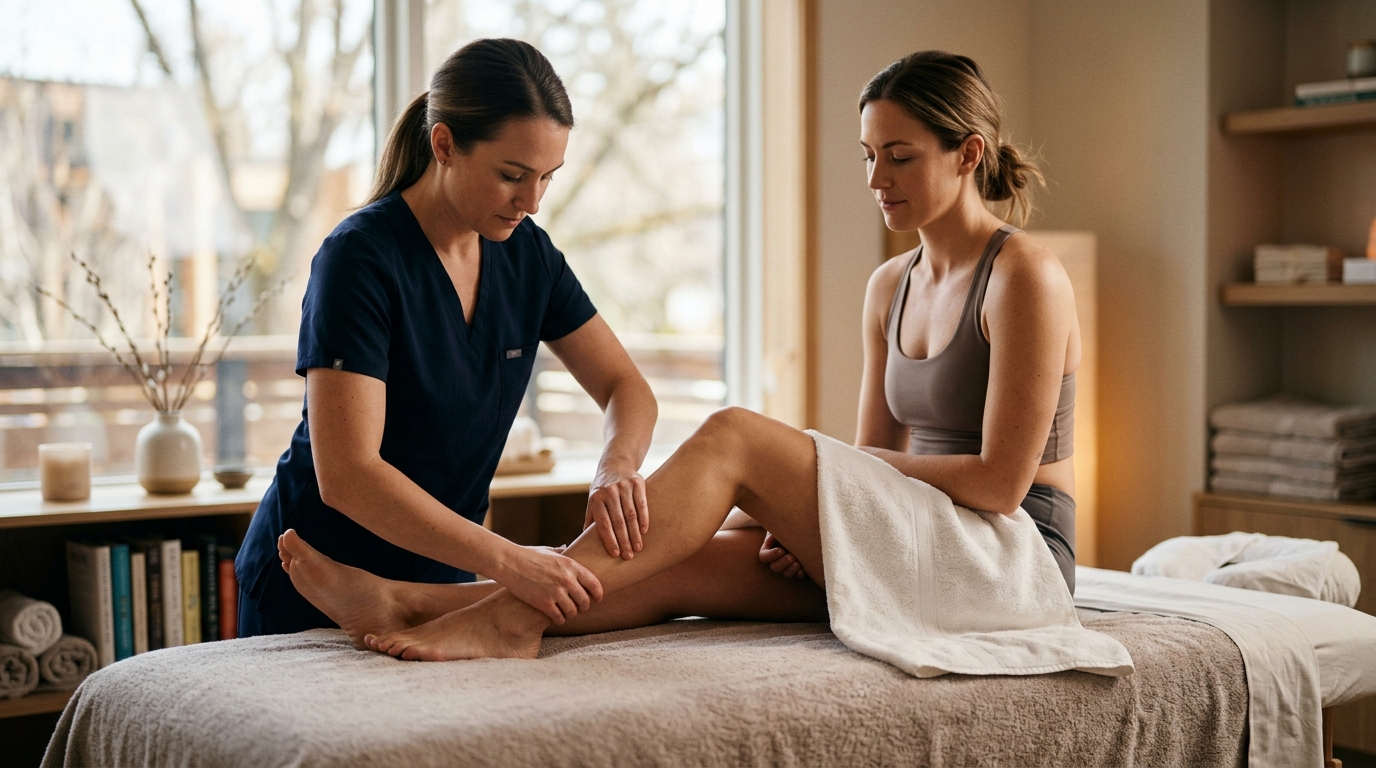
When you strain a muscle, sprain a ligament, or sustain a localized soft tissue injury, one of the first practical questions is: how many massage sessions will it take to recover? The honest answer depends on injury severity, your body's healing response, and whether the right techniques are applied at the right time. This guide breaks down the clinical reasoning behind session frequency so you can plan your recovery with confidence.
The Short Answer: 3–5 Sessions Is the Starting Point for Most Injuries
For a typical localized soft tissue injury—a mild muscle strain, a grade-1 ligament sprain, or a repetitive-use flare-up—clinical practitioners commonly recommend a short series of 3 to 5 sessions spread over 4 to 8 weeks, followed by maintenance visits every 6 to 8 weeks. This framework allows therapists to address root causes rather than just symptoms.
Chronic or long-standing injuries with adhesions, compensatory movement patterns, or scar tissue buildup may need 8 to 12 sessions before meaningful resolution. The key principle is that consistency outperforms any single session.
Why Timing Matters: The Three Phases of Soft Tissue Healing
Your body repairs damaged tissue through three overlapping biological stages. Matching massage technique to the correct phase is essential for safe, effective treatment.
Phase 1: Inflammatory Phase (0–72 Hours)
Immediately after injury, your body increases blood flow to the damaged area. Swelling, warmth, and pain are protective responses designed to stabilize tissue and begin cellular cleanup. During this window, deep or circulatory massage on the injured site can actually increase edema and hemorrhage.
What works instead: lymphatic drainage massage and gentle manual techniques. By reducing excess fluid pressure on nerve receptors, lymphatic work decreases pain through two mechanisms—gate control theory (light rhythmic touch closes the spinal gate to pain signals) and direct edema reduction.
Phase 2: Proliferative Phase (Days 3–21)
Fibroblasts produce new collagen fibers to rebuild the damaged tissue. This is when sub-acute massage techniques become appropriate. Progressive deep tissue work, myofascial release, and gentle cross-friction massage help guide collagen alignment and prevent disorganized scar formation.
Sessions during this phase are typically scheduled once or twice per week, depending on how the tissue responds between appointments.
Phase 3: Remodeling Phase (3 Weeks–12+ Months)
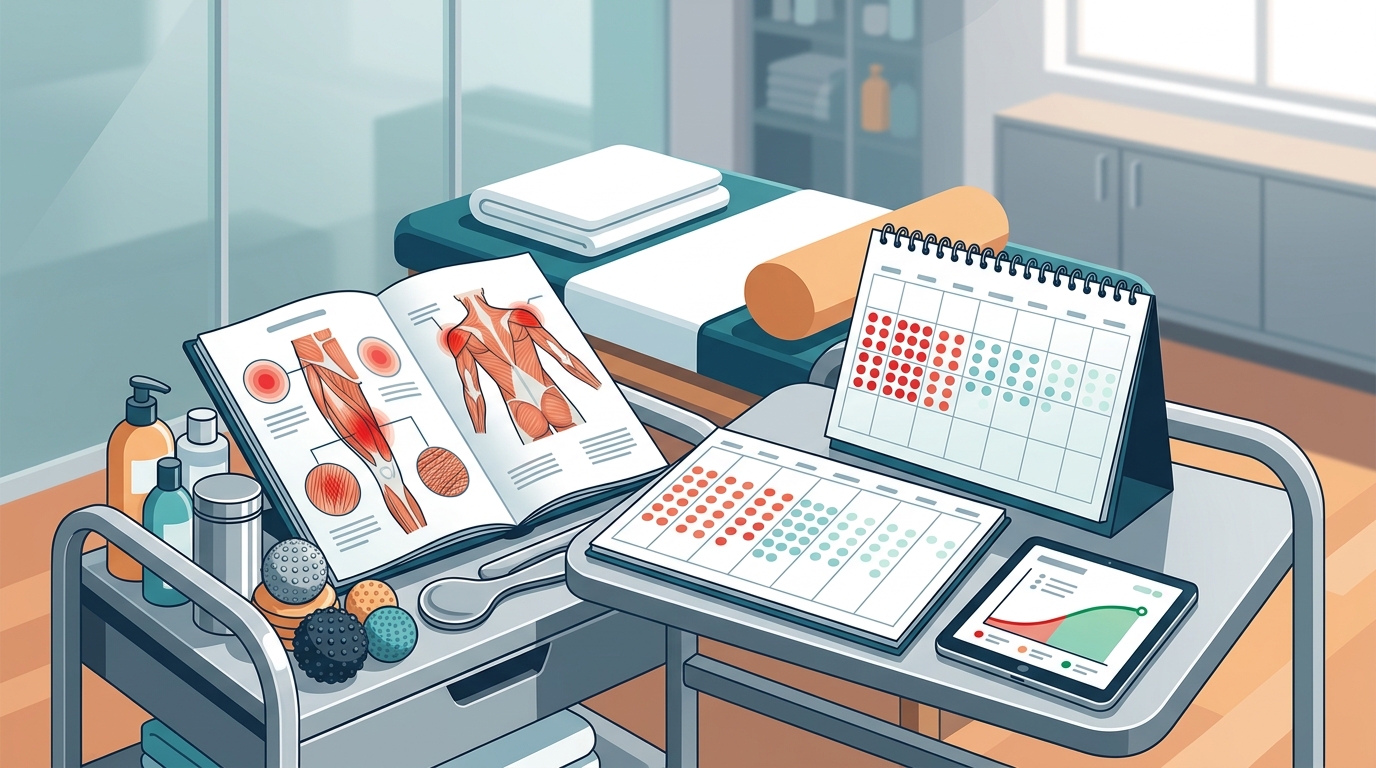
Collagen fibers gradually reorganize along lines of mechanical stress. Without progressive loading and mobility work, tissue may stiffen or heal with restricted movement patterns. This is the phase where more targeted deep tissue work, instrument-assisted soft tissue mobilization, and guided movement exercises restore flexibility and functional strength.
Session frequency usually decreases to every 2 to 3 weeks during active remodeling, then transitions to maintenance intervals of 6 to 8 weeks once functional goals are met.
Session Estimates by Injury Type
| Injury Type | Typical Sessions | Timeframe | Primary Techniques |
|---|---|---|---|
| Mild muscle strain (Grade 1) | 3–4 | 2–4 weeks | Lymphatic drainage → deep tissue |
| Moderate strain (Grade 2) | 5–8 | 4–8 weeks | Myofascial release, cross-friction |
| Grade-1 ligament sprain | 3–5 | 3–6 weeks | Surrounding musculature work, joint mobilization |
| Tendinopathy / overuse injury | 5–10 | 6–12 weeks | Deep friction massage, progressive loading |
| Post-surgical soft tissue restriction | 8–12 | 8–16 weeks | Scar tissue mobilization, myofascial release |
| Chronic adhesion / old injury | 6–12 | 8–16 weeks | Deep tissue, IASTM, functional movement |
These ranges represent general clinical guidelines. Your therapist should reassess progress every 3 to 4 sessions and adjust the treatment plan accordingly.
What Happens During Your First Injury-Recovery Massage
If your injury is still in the acute phase, expect a lighter evaluation session. Your therapist will assess swelling, range of motion limitations, pain levels, and tissue quality before determining which techniques are safe. The goal of session one is gathering information and providing gentle relief—not aggressive deep work.
As heat and swelling decrease and movement improves over subsequent visits, deeper techniques can be introduced progressively.
Techniques Used at Each Stage
Lymphatic Drainage
Used in the first 48 to 72 hours and beyond to manage swelling. Light, rhythmic strokes encourage the body's lymphatic system to clear protein-rich edema that standard rest-ice-compression-elevation protocols cannot fully address on their own.
Deep Tissue Massage
Slower, more specific pressure targeting deeper muscle and fascial layers to free adhesions, restore tissue glide, and improve range of motion. Most useful for sub-acute and chronic issues—lingering tightness, guarded movement, and adhesions from older injuries.
Cross-Friction (Deep Friction) Massage
Developed by James Cyriax, this technique applies oscillating pressure across the direction of tissue fibers. It maintains soft tissue mobility and helps prevent adherent scars from forming in ligaments, tendons, and muscles. Treatment duration per area typically lasts 10 to 15 minutes.
Myofascial Release
Sustained pressure that targets fascial restrictions. Research supports its effectiveness for conditions like plantar heel pain and lateral epicondylitis. When fascia becomes restricted after trauma, myofascial release helps hydrate tissue and restore normal sliding between fascial layers.
Instrument-Assisted Soft Tissue Mobilization (IASTM)
Stainless steel tools with beveled edges apply controlled pressure to break up adhesions and stimulate tissue remodeling. Studies have demonstrated that IASTM increases tissue perfusion, improves range of motion, and can reduce and structurally remodel scar tissue over a treatment course of several weeks.
Factors That Influence How Many Sessions You'll Need
- Injury severity: A minor strain heals faster than a partial tear or chronic adhesion.
- Time since injury: Acute injuries addressed early often resolve in fewer sessions than long-standing conditions with compensatory patterns.
- Your overall health: Circulation, nutrition, sleep quality, and stress levels all affect tissue repair speed.
- Compliance with home care: Stretching, movement exercises, hydration, and rest between sessions accelerate recovery.
- Multimodal approach: Combining massage with chiropractic care, physical therapy exercises, or other rehabilitation methods often produces better outcomes than massage alone.
Why One Session Is Rarely Enough
Soft tissue healing is a biological process that unfolds over weeks to months. Massage therapy does not heal injured tissue directly—it influences the biological environment in which healing occurs. A single session can reduce immediate pain and improve circulation, but lasting structural change in damaged tissue requires repeated, staged intervention.
Think of it this way: each session builds on the last. Early sessions focus on reducing swelling and calming the nervous system. Middle sessions break down adhesions and improve tissue mobility. Later sessions restore functional strength and movement quality. Skipping phases or spacing sessions too far apart diminishes cumulative benefits.
When to Expect Results
Most clients with acute localized injuries notice meaningful pain reduction and improved mobility within the first 2 to 3 sessions. Full functional recovery—returning to sport, work, or daily activities without limitation—typically requires completing the recommended treatment series.
If you are not seeing progressive improvement after 4 to 5 sessions, your therapist should reassess the treatment plan and consider whether additional diagnostic imaging or referral to a specialist is appropriate.
Piedmont Injury Massage: Your Tissue Trauma Recovery Partner
At Piedmont Injury Massage, we specialize in clinical massage therapy for localized soft tissue injuries. Every treatment plan begins with a thorough intake assessment that identifies your injury phase, pain patterns, and functional goals. We then design a session-by-session recovery roadmap tailored to your specific condition—not a one-size-fits-all protocol.
Whether you are recovering from a car accident, a sports injury, a workplace strain, or a chronic overuse condition, our therapists match the right technique to the right healing phase so you get measurable results in fewer visits.
Key Takeaways
- Most localized tissue injuries respond to a series of 3 to 5 sessions over 4 to 8 weeks, with maintenance every 6 to 8 weeks.
- Chronic or complex injuries may require 8 to 12 sessions over 2 to 4 months.
- Technique selection must match your healing phase: gentle lymphatic work in the acute stage, progressive deep tissue and myofascial release in sub-acute and remodeling stages.
- Avoid deep tissue massage directly on injured tissue during the first 48 to 72 hours.
- Consistency matters more than intensity—regular sessions outperform sporadic deep-pressure visits.
- Combine massage with stretching, strengthening, and professional guidance for the best outcomes.
Frequently Asked Questions
How many massage sessions are typically needed for localized tissue trauma?
Most localized soft tissue injuries respond well to a focused series of 3 to 5 massage sessions spread over 4 to 8 weeks, followed by maintenance visits every 6 to 8 weeks. Chronic or complex injuries may require 8 to 12 sessions before significant resolution.
Can I get a deep tissue massage immediately after an injury?
No. During the first 48 to 72 hours after an acute injury, deep tissue work on the injured area should be avoided. Lymphatic drainage and gentle techniques are appropriate in the acute phase, while deeper work is introduced once swelling and heat subside.
What types of massage are most effective for tissue trauma?
Deep tissue massage, myofascial release, cross-friction massage, and lymphatic drainage each play a role at different healing stages. A qualified therapist will match the technique to your injury phase—inflammatory, proliferative, or remodeling.
Should I combine massage with other treatments for injury recovery?
Yes. Massage therapy combined with stretching, strengthening exercises, and chiropractic care often produces better outcomes than massage alone. Multimodal care has been shown to provide added benefits for conditions like carpal tunnel syndrome and lateral epicondylitis.
How do I know when to stop massage treatment for my injury?
Treatment typically concludes when you have regained full pain-free range of motion, functional strength has returned, and you can perform daily activities without discomfort. Your therapist will reassess progress every few sessions and recommend transitioning to maintenance visits.