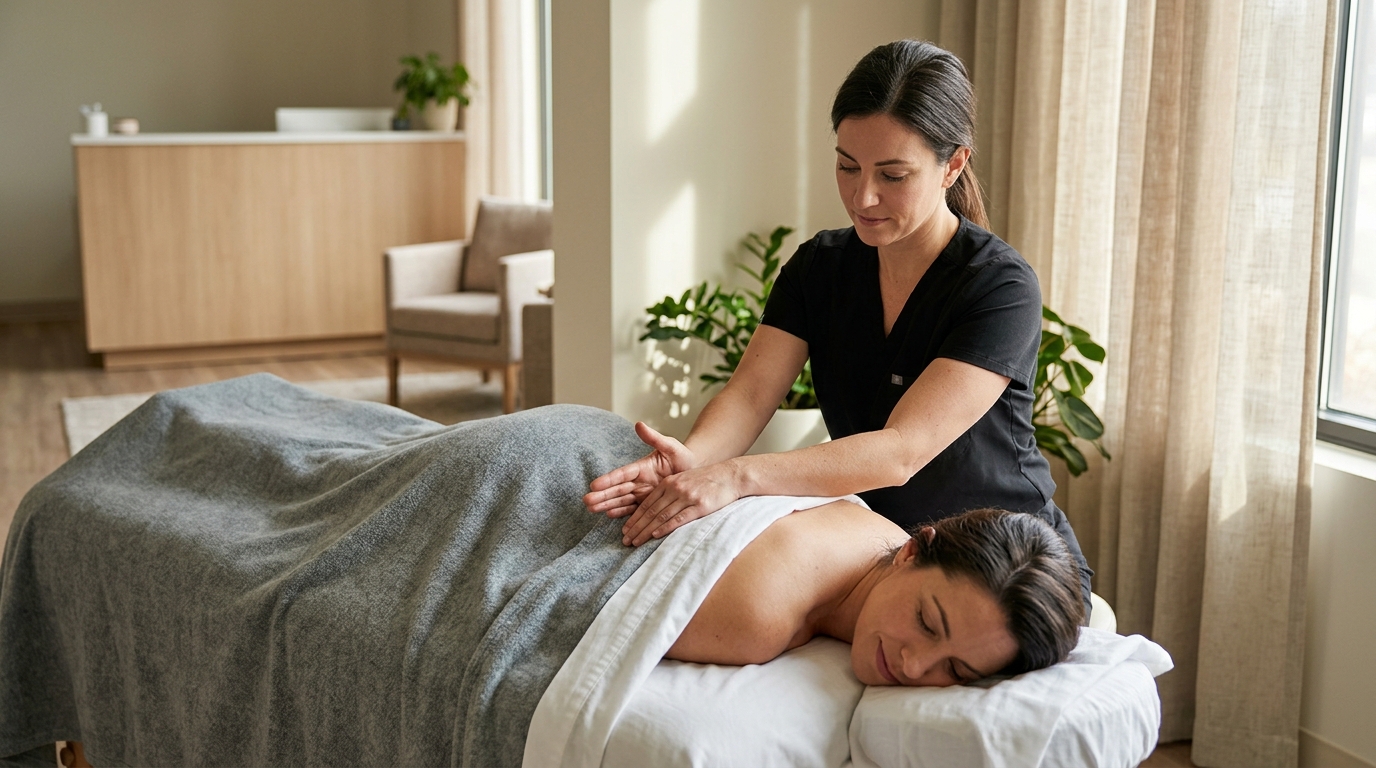
If you are living with persistent back pain weeks or months after a car accident, slip-and-fall, or workplace injury, you are not alone—and medical massage may offer meaningful relief. This guide explains what the research says, how medical massage differs from a standard spa visit, and what to expect at Piedmont Injury Massage.
Why Back Pain Lingers After a Personal Injury
Many neck and back injuries develop delayed symptoms that do not appear until days or even weeks after an accident. You might feel fine initially, only to wake up later with intense pain and stiffness. Soft-tissue damage—strained muscles, micro-tears in ligaments, inflamed fascia—can create a cycle of muscle guarding, reduced mobility, and chronic pain that persists long after the original incident.
Approximately 70–84 percent of people experience low back pain at some point in their lives, and injuries from accidents can easily push an acute episode into chronic territory when left under-treated. Without targeted intervention, scar tissue forms unevenly, muscle compensation patterns develop, and pain becomes self-reinforcing.
What Is Medical Massage—and How Is It Different?
Medical massage is a therapeutic approach that involves the manipulation of soft tissues to improve circulation, reduce tension and pain, decrease adhesions and scar tissue, and calm the nervous system to promote healing. Unlike a relaxation-focused spa session, every technique is selected to address a specific diagnosed condition.
At Piedmont Injury Massage, licensed therapists use a combination of modalities—myofascial release, neuromuscular therapy, trigger-point work, and manual lymphatic drainage—tailored to the type of injury you sustained. The goal is measurable improvement in pain levels, range of motion, and daily function.
What the Research Says About Massage for Back Pain
Multiple peer-reviewed studies support the use of massage therapy for back pain recovery:
- Annals of Internal Medicine (2011): A randomized controlled trial of 401 patients with nonspecific chronic low back pain found that massage may be effective for treatment, with benefits lasting at least six months after receiving weekly massage for ten weeks. Both relaxation and structural massage outperformed usual care consisting of medication and physical therapy.
- NIH Evidence Map (2019): A review of 49 systematic reviews found low-strength evidence of potential benefits of massage for low back, neck, cancer, arthritis, postoperative, and musculoskeletal pain. While the authors noted that more large-scale studies are needed, the overall direction of evidence favored massage over inactive comparators.
- Cochrane Review (2015): An analysis of 25 RCTs with 3,096 participants concluded that acute, sub-acute, and chronic low back pain showed improvements in pain outcomes with massage in the short-term follow-up, with only minor adverse effects reported.
- Real-World Effectiveness Study (2017): Researchers at Indiana University found that more than 50 percent of participants experienced clinically meaningful improvements in chronic low back pain with disability after a series of 10 real-world massage sessions.
The overall picture: massage therapy is a low-risk intervention that consistently demonstrates short-term pain relief and functional gains for back pain, especially when combined with active treatments like exercise.
Five Ways Medical Massage Addresses Post-Injury Back Pain
Breaks Up Scar Tissue
After an injury, the body lays down collagen fibers in a disorganized pattern. Medical massage techniques help remodel scar tissue so that fibers align along natural lines of force, restoring flexibility and reducing pain.
Reduces Muscle Spasm and Guarding
Injured muscles often lock into a protective spasm. Targeted pressure and stretching techniques interrupt the spasm cycle, allowing the muscle to relax and blood flow to increase.
Improves Circulation to the Injury Site
Medical massage can help speed up the healing process and reduce inflammation by improving circulation to the affected area, delivering oxygen and nutrients essential for tissue repair.
Calms the Nervous System
Chronic pain rewires the central nervous system toward heightened sensitivity. The sustained pressure and rhythmic movement of medical massage stimulate the parasympathetic response, lowering cortisol levels and reducing the nervous system's pain amplification.
Restores Range of Motion
Adhesions between muscle layers and fascia restrict movement. By systematically releasing these restrictions, medical massage helps you regain the ability to bend, twist, and lift without pain.
What to Expect During Your First Visit at Piedmont Injury Massage
- Intake and Assessment: Your therapist reviews your medical records, injury history, and current symptoms. Bring any imaging reports, physician referrals, or insurance documentation.
- Treatment Plan: Based on your assessment, a customized plan is created—typically starting with one to two sessions per week and adjusting as you improve.
- Hands-On Session: Sessions generally last 60 minutes and combine multiple techniques. Your therapist checks in frequently about pressure and comfort.
- Progress Tracking: Pain levels and functional benchmarks are documented at every visit, creating a clear record of improvement that is also valuable for insurance or legal purposes.
Medical Massage and Your Personal Injury Claim
If your back pain resulted from someone else's negligence, the cost of medical massage may be recoverable as part of your personal injury settlement. All medical treatment reasonably related to correcting the harm done is potentially recoverable. To strengthen your case:
- Get a written prescription or referral from your treating physician.
- Use a licensed massage therapist (LMT) in a clinical or rehabilitation-style setting.
- Keep detailed records of every session, including dates, techniques used, and progress notes.
Insurance companies are more likely to consider massage as reasonable and necessary medical treatment when it is prescribed by a doctor and performed by a licensed professional in a clinical environment.
When Medical Massage May Not Be Appropriate
While medical massage is generally safe, certain conditions require caution:
- Acute fractures or unstable spinal injuries
- Active infections or open wounds at the treatment site
- Blood clotting disorders or use of anticoagulant medications
- Severe osteoporosis
- Recent surgical sites that have not been cleared by a physician
Always obtain medical clearance before starting massage therapy after a significant injury. A qualified medical massage therapist will also screen for contraindications during your intake assessment.
Combining Medical Massage With Other Treatments
Research suggests that massage combined with exercise and behavioral counseling is more cost-effective than general practitioner care alone. Medical massage works best as part of a multidisciplinary recovery plan that may include:
- Physical therapy for strengthening and stabilization
- Chiropractic care for spinal alignment
- Physician-supervised pain management
- Home exercise programs prescribed by your care team
At Piedmont Injury Massage, we coordinate with your physicians, chiropractors, and physical therapists to ensure your massage treatment complements—not conflicts with—your broader recovery plan.
Key Takeaways
- Medical massage targets the specific soft-tissue damage caused by personal injuries, unlike general relaxation massage.
- Multiple peer-reviewed studies show massage produces short-term pain relief and functional improvement for chronic low back pain, with one major trial showing benefits lasting six months.
- More than 50 percent of participants in a real-world study experienced clinically meaningful improvement in chronic low back pain after 10 massage sessions.
- Medical massage is low-risk, with only minor adverse effects reported across large systematic reviews.
- Documentation from a licensed therapist strengthens both your recovery and your personal injury claim.
- The best outcomes occur when massage is combined with active therapies like exercise and physical therapy.
Frequently Asked Questions
Can medical massage actually reduce back pain from a personal injury?
Yes. A randomized controlled trial of 401 patients published in the Annals of Internal Medicine found that massage therapy may be effective for chronic back pain, with benefits lasting at least six months after ten weekly sessions. Both types of massage studied outperformed usual medical care.
How soon after a personal injury should I start medical massage?
Once your physician confirms that acute inflammation has stabilized and there are no fractures or unstable injuries, massage can typically begin within a few weeks. Early intervention helps prevent chronic scar tissue buildup and long-term muscle compensation patterns.
Is medical massage covered by insurance after a personal injury?
It depends on your policy. Auto insurance with Medical Payments (MedPay) or Personal Injury Protection (PIP) may cover prescribed medical massage. A physician prescription and treatment by a licensed massage therapist in a clinical setting create the strongest case for coverage.
What is the difference between medical massage and a spa massage?
Medical massage is outcome-driven: each session targets a diagnosed condition using specific clinical techniques. Progress is measured and documented. Spa massage prioritizes relaxation and general well-being without the same clinical focus or documentation.
How many sessions will I need?
Research protocols commonly study 10 weekly sessions, but your actual plan depends on injury severity, your body's response, and your treatment goals. Your therapist at Piedmont Injury Massage will reassess your progress regularly and adjust accordingly.
Ready to Start Healing?
If ongoing back pain from a personal injury is limiting your daily life, medical massage may be the missing piece of your recovery plan. At Piedmont Injury Massage, our licensed therapists specialize in treating accident-related soft-tissue injuries with evidence-based techniques. Contact us today to schedule your initial assessment and take the first step toward lasting relief.