
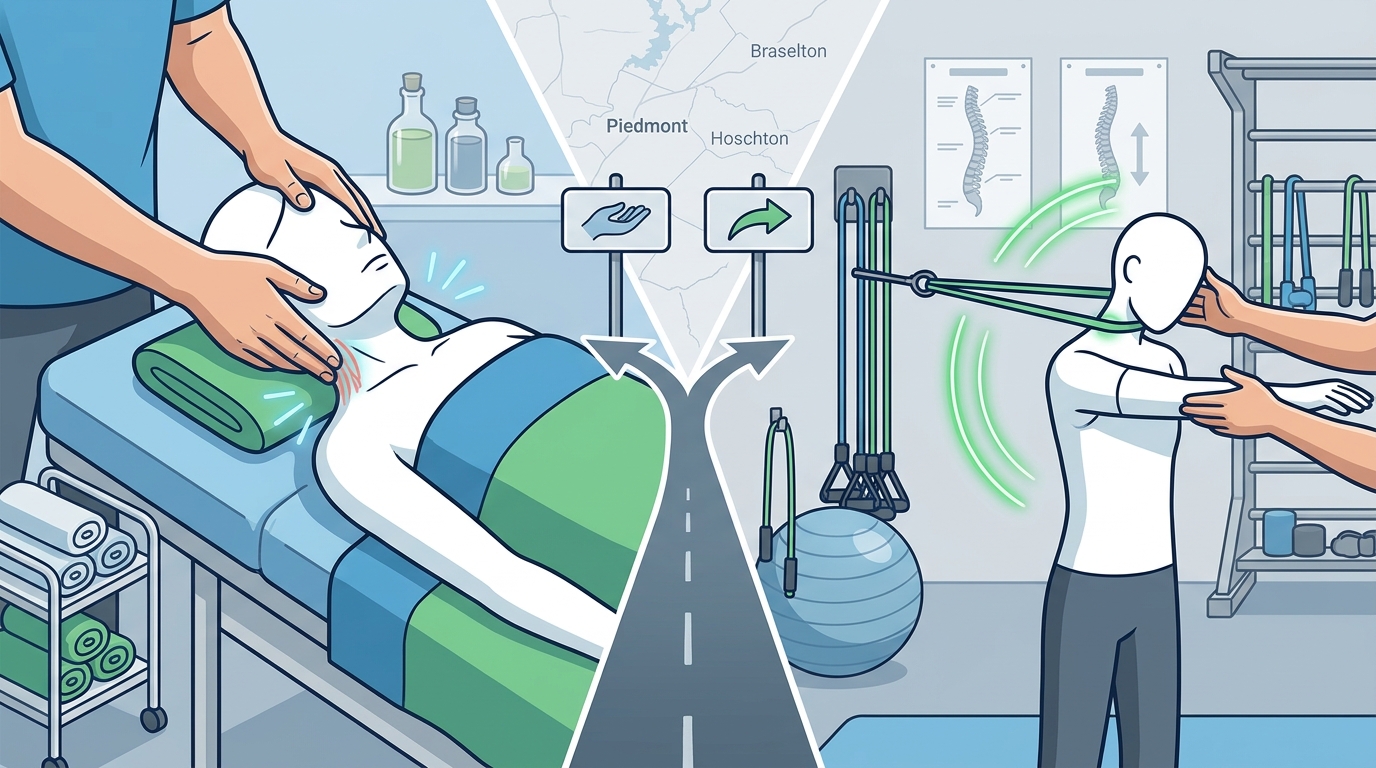
For residents in Piedmont, Georgia, recovering from whiplash requires a strategic approach. Massage therapy is highly effective for soft tissue tension and pain management, while physical therapy focuses on structural mobility. Choosing the right method depends on your specific injury stage and goals. Piedmont Injury Massage provides specialized care for those seeking hands-on pain relief and muscle recovery in the Braselton and Hoschton areas.
Massage Therapy for Whiplash
Massage therapy is a hands-on treatment that uses manual manipulation to relieve muscle tension and improve circulation. For whiplash patients, this approach targets the neck, shoulders, and upper back to reduce stiffness. It is particularly useful for managing the chronic pain and stress that often accompany soft tissue injuries. At Piedmont Injury Massage, therapists use techniques like myofascial release to address the specific areas affected by whiplash. This method is ideal for individuals who want to reduce pain without invasive procedures. It also helps improve sleep quality and overall relaxation, which are crucial for healing.
Strengths and Limits
The primary strength of massage is its ability to provide immediate relief from muscle spasms. It is non-invasive and generally safe for most people. However, it may not address underlying structural issues like disc herniations. It is best used in conjunction with other treatments for a comprehensive recovery plan. Patients should avoid deep tissue massage during the acute phase of injury to prevent further irritation.
Physical Therapy for Whiplash
Physical therapy is a clinical approach that uses exercise, manual therapy, and education to restore function. It focuses on strengthening the muscles that support the spine and improving range of motion. For whiplash, physical therapy is often the first line of treatment recommended by physicians. It helps patients regain independence in daily activities. While effective, it requires active participation and consistent practice. It is suitable for those who want to build long-term resilience and prevent future injuries.
Strengths and Limits
Physical therapy offers a structured path to recovery with measurable goals. It addresses both pain and function. The limitation is that it can be time-consuming and requires discipline. It may not provide the immediate relaxation that massage offers. It is best for patients who are motivated to engage in active rehabilitation.
Frequency-Specific Microcurrent (FSM)
Frequency-specific microcurrent is a technique that uses low-level electrical current to treat pain and promote healing. It works by increasing the production of ATP, which provides energy for cellular repair. This modality is particularly useful for nerve pain and inflammation associated with whiplash. It is a non-invasive option that can be used alongside massage or physical therapy. At Piedmont Injury Massage, FSM is offered as a specialized service for those seeking advanced pain management. It is ideal for patients who have not responded well to traditional treatments.
Strengths and Limits
FSM is highly effective for reducing inflammation and promoting tissue repair. It is safe for most individuals and has minimal side effects. The limitation is that it is not suitable for everyone, such as those with pacemakers or pregnancy. It is best for patients with chronic pain or nerve-related issues.
Comparison of Treatment Approaches
| Criteria | Massage Therapy | Physical Therapy | FSM |
|---|---|---|---|
| Primary Focus | Pain relief and relaxation | Function and mobility | Cellular repair and nerve pain |
| Invasiveness | Non-invasive | Non-invasive | Non-invasive |
| Active Participation | Passive | Active | Passive |
| Best For | Chronic pain and stress | Rehabilitation and strength | Nerve pain and inflammation |
| Duration | Short-term relief | Long-term function | Targeted healing |
Choosing the Right Approach
Selecting the right treatment depends on your specific needs and goals. Understanding the strengths of each method helps you make an informed decision.
Choose Massage Therapy If
You are experiencing chronic pain, muscle tension, or stress related to whiplash. You prefer a passive treatment that provides immediate relaxation. You want to improve sleep quality and overall well-being. You are looking for a non-invasive option to complement other treatments.
Choose Physical Therapy If
You need to restore range of motion and strength. You are motivated to engage in active exercises. You want to prevent future injuries by building long-term resilience. You have been recommended by your physician for structured rehabilitation.
Choose FSM If
You are dealing with nerve pain or inflammation that has not responded to other treatments. You are looking for a targeted approach to promote cellular healing. You want a non-invasive option that works at the cellular level. You are interested in advanced pain management techniques.
Frequently Asked Questions
Can I use massage and physical therapy together?
Yes, combining massage and physical therapy is often beneficial. Massage can help reduce pain and tension, making it easier to perform physical therapy exercises. This integrated approach can lead to faster and more complete recovery.
Is FSM safe for whiplash patients?
FSM is generally safe for most individuals, including those with whiplash. However, it is not recommended for people with pacemakers, insulin pumps, or those who are pregnant. Always consult with a healthcare provider before starting any new treatment.
How many sessions do I need for whiplash recovery?
The number of sessions varies depending on the severity of the injury and your response to treatment. Some patients may need only a few sessions, while others may require a longer course of treatment. Your therapist will develop a personalized plan based on your progress.
What should I expect during a whiplash massage session?
A whiplash massage session typically focuses on the neck, shoulders, and upper back. The therapist will use gentle to moderate pressure to relieve tension and improve circulation. You may feel some discomfort during the session, but it should not be painful. Communication with your therapist is key to ensuring a comfortable experience.
How do I switch between treatment providers?
Switching between providers is straightforward. Ensure that your new provider is qualified and experienced in treating whiplash. Share your medical history and previous treatment plans with them. This helps them understand your needs and develop an effective treatment strategy.
Conclusion
Recovering from whiplash in Piedmont, Georgia, requires a tailored approach. Whether you choose massage therapy, physical therapy, or FSM, the key is to work with a qualified professional who understands your specific needs. Contact Piedmont Injury Massage to schedule a consultation and begin your path to recovery. Our certified therapists are dedicated to providing personalized care for pain management and muscle recovery in Braselton and Hoschton.