

Frequency Specific Microcurrent for Pain Relief: How It Works, What Research Shows, and What to Expect
If you have been living with chronic pain, recovering from an injury, or struggling with a condition that simply will not resolve, Frequency Specific Microcurrent (FSM) may be a therapy worth exploring. At Piedmont Injury Massage we integrate FSM into our treatment plans because of its ability to target tissue-level dysfunction with a precision that manual work alone cannot always achieve.
This guide covers the science behind FSM, the clinical evidence supporting it, what a session actually looks like, and how it fits alongside massage therapy for pain relief and recovery.
What Is Frequency Specific Microcurrent?
Frequency Specific Microcurrent is a therapeutic technique that delivers extremely low-level electrical current — measured in microamperes — through the body using paired frequencies on two channels. Each channel targets a different therapeutic objective: one frequency addresses the condition (such as inflammation or scar tissue), while the other targets a specific tissue type (such as nerve, muscle, or fascia).
Unlike a TENS unit, which operates at milliamp levels primarily to block pain signals, FSM current is roughly one-thousandth the strength of TENS. Because the current is so close to the body's own bioelectrical signals, most patients cannot feel it during treatment.
The Biological Resonance Principle
FSM operates on the concept of biological resonance. Every tissue in the body has a characteristic resonant frequency — much like a tuning fork vibrates at a specific pitch. When tissue is injured, inflamed, or scarred, its normal electrical state becomes disrupted. FSM aims to restore that natural frequency, essentially helping damaged cells return to normal function.
Research suggests that microcurrent in the microampere range can increase cellular ATP (adenosine triphosphate) production by up to 500 percent, providing the energy cells need to repair and heal. At the same time, the specific frequency pairs appear to reduce inflammation, soften scar tissue, and modulate pain signaling pathways.
What Does the Research Say About FSM Effectiveness?
While FSM is classified as a complementary therapy and further large-scale studies are still needed, the existing clinical evidence is encouraging.
Low Back Pain and Neck Pain
A retrospective case-control study published in the Journal of Bodywork and Movement Therapies compared 213 patients receiving FSM alongside physical rehabilitation against 78 control patients. The results were notable: patients in the FSM group had significantly lower post-treatment pain scores (p = 0.02) and a significantly higher percentage achieved minimal disability (p = 0.01) and full treatment success (p = 0.006) compared to controls.
Chronic Myofascial Low Back Pain
In a case series of 22 patients with chronic low back pain averaging 8.8 years in duration, FSM treatment produced a statistically significant 3.8-fold reduction in pain intensity on a visual analog scale. This was achieved over an average treatment period of roughly 5.6 weeks at one session per week. Remarkably, in 90 percent of these patients, previous treatments including drug therapy, chiropractic manipulation, physical therapy, and acupuncture had failed to produce equivalent benefits.
Delayed Onset Muscle Soreness (DOMS)
A controlled study on delayed onset hamstring muscle soreness found that 20 minutes of FSM provided significant protection from post-exercise soreness at 24, 48, and 72 hours. Treated legs scored an average of 1.3 on a 10-point pain scale at 24 hours, compared to 5.2 for untreated legs — a striking difference that held at every time point measured.
Fibromyalgia, Neuropathic Pain, and Beyond
FSM has been used to treat fibromyalgia associated with cervical spine trauma, acute and chronic neuropathic pain, visceral conditions, and even emotional distress. A 2025 pilot randomized controlled trial found that FSM therapy may be a promising treatment for addressing somatic complaints and negative emotional states in distressed adults, with evidence that it modulates autonomic nervous system balance by reducing sympathetic activation and enhancing parasympathetic tone.
Important Caveats
The FDA has approved FSM devices as safe to use, and there are no known serious risks associated with the therapy. However, it remains a complementary modality — not a standalone cure. Effectiveness depends heavily on accurate diagnosis and correct frequency selection by a trained practitioner.
How FSM Differs from TENS and Other Electrotherapy
| Feature | FSM | TENS |
|---|---|---|
| Current Level | Microamperes (millionths of an amp) | Milliamperes (thousandths of an amp) |
| Sensation | Sub-sensory — most patients feel nothing | Noticeable tingling or buzzing |
| Channels | Two channels with paired frequencies | Typically single frequency |
| Primary Mechanism | Cellular resonance, ATP production, tissue repair | Pain gate blocking |
| Goal | Address underlying tissue dysfunction | Temporary pain relief |
What Happens During an FSM Session at Piedmont Injury Massage
Understanding the treatment process can make your first session more comfortable. Here is a step-by-step look at what to expect.
Step 1: Assessment and Diagnosis
Your therapist begins with a thorough evaluation of your condition, injury history, and symptoms. Because FSM effectiveness depends entirely on an accurate diagnosis, this step is critical. The specific frequency pairs selected are determined by the tissue involved and the nature of the problem — for example, inflammation in a nerve requires a different pair than scar tissue in fascia.
Step 2: Hydration
You will be asked to drink plenty of water before your appointment. Proper hydration is essential because microcurrent travels through water-rich tissues more effectively. Adequate hydration also helps prevent mild side effects like lightheadedness that some people experience after treatment.
Step 3: Application
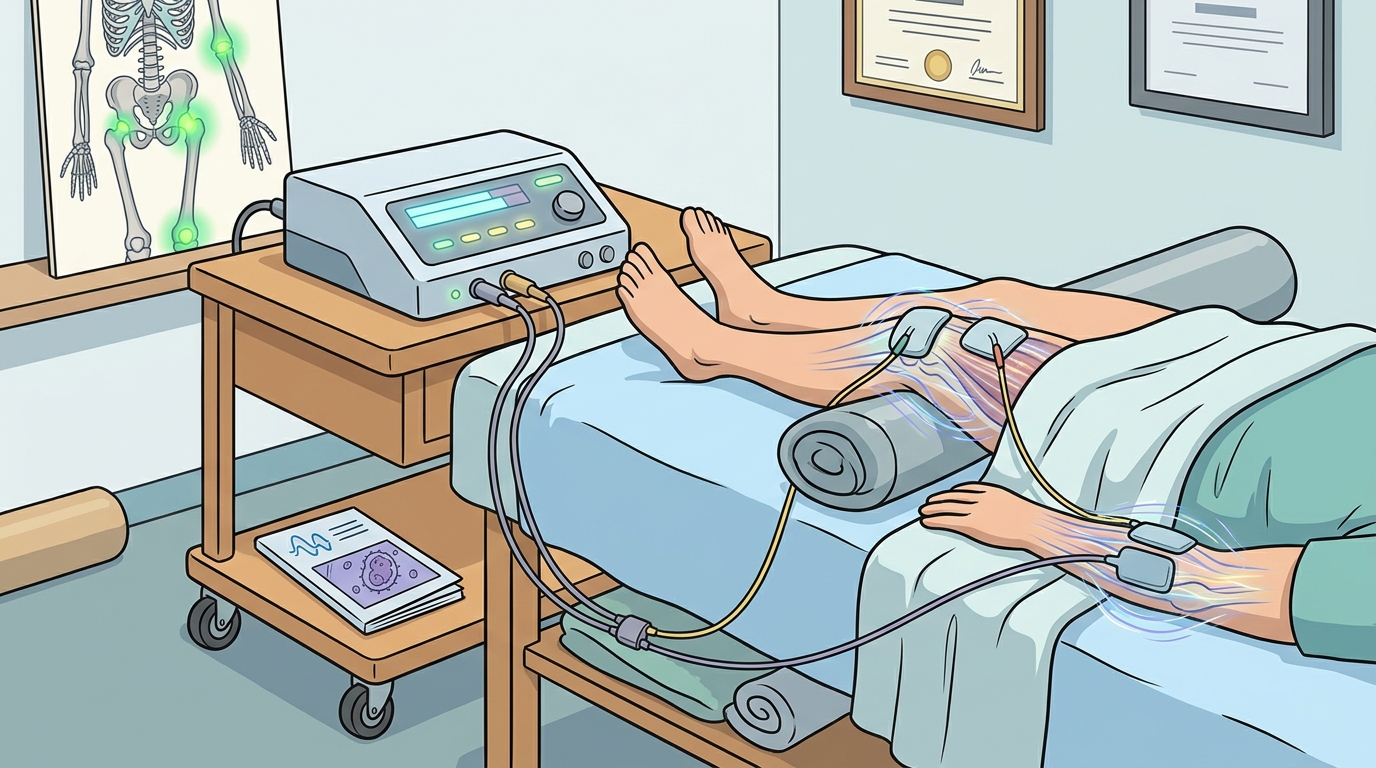
The therapist applies moistened towels, gel electrode patches, or conductive graphite gloves to your skin. A battery-powered FSM device delivers the paired frequencies through these contact points. The current flows through the targeted tissues — you will likely feel nothing at all, or perhaps a subtle warmth.
Step 4: Treatment Duration
Sessions typically last 20 to 60 minutes depending on the condition. Some protocols run specific frequency sequences, changing pairs every few minutes to address multiple layers of tissue dysfunction in a single visit.
Step 5: Post-Treatment Observation
Many patients notice effects right away — reduced swelling, softer muscles, decreased pain. One of the hallmarks of FSM is a palpable tissue softening that practitioners can feel within seconds when the correct frequency is applied. Your therapist may combine FSM with hands-on massage work in the same session for compounded benefit.
Step 6: Follow-Up Plan
Depending on your condition, you may need several sessions. Acute injuries may respond quickly, while chronic conditions — especially those lasting more than five years — tend to require more frequent visits before achieving lasting relief. Your therapist will develop a progressive treatment schedule, tapering frequency as your pain decreases.
Conditions Commonly Treated with FSM
- Chronic low back pain — especially myofascial trigger point-related pain
- Neck pain and cervical spine injuries
- Fibromyalgia — particularly when associated with spine trauma
- Neuropathic pain — including post-surgical and post-shingles nerve pain
- Delayed onset muscle soreness — for athletes and active individuals
- Scar tissue and adhesions — FSM can remodel scar tissue far faster than manual techniques alone
- Tendinopathies — tennis elbow, plantar fasciitis, rotator cuff issues
- Auto accident injuries — especially when treated within the first hours
- Post-surgical recovery — to accelerate healing and manage pain
- Inflammatory conditions — joint swelling, bursitis
Why FSM and Massage Therapy Work Well Together
At Piedmont Injury Massage, we find that combining FSM with skilled manual therapy produces results that neither modality achieves alone. Here is why:
- FSM addresses cellular-level dysfunction — reducing inflammation and restoring normal electrical activity in damaged tissues.
- Massage addresses structural tension — releasing muscle guarding, improving circulation, and restoring range of motion.
- Together, they create a feedback loop — FSM softens tissue from the inside out while massage works it from the outside in. Clients often report that their muscles release more easily during massage when FSM is running simultaneously.
For auto accident injuries, post-surgical recovery, or stubborn chronic pain, this combination approach allows us to work more effectively and often achieve meaningful results in fewer sessions.
Who Should Avoid FSM?
FSM is considered very safe, but certain individuals should not receive it:
- People with cardiac pacemakers or implanted drug delivery pumps
- Individuals with uncontrolled seizure disorders
- Pregnant women (as a precaution)
Always disclose your full medical history to your therapist before treatment.
Key Takeaways
- FSM uses paired microampere frequencies to target specific tissues and conditions at the cellular level — it is not the same as TENS therapy.
- Clinical studies show meaningful pain reduction — including a 3.8-fold decrease in chronic low back pain and significant protection from exercise-induced soreness.
- The therapy is painless, non-invasive, and FDA-approved as safe, though it works best as a complement to other treatments rather than a standalone solution.
- Accurate diagnosis is essential — FSM effectiveness depends on selecting the correct frequency pairs for your specific tissue and condition.
- Hydration matters — drink plenty of water before and after your session for best results.
- FSM pairs exceptionally well with massage therapy, creating a synergistic approach to pain relief and tissue recovery that is especially valuable for injury rehabilitation.
Frequently Asked Questions
Does Frequency Specific Microcurrent actually work for pain?
Clinical studies support its effectiveness. A peer-reviewed study on chronic low back pain found a 3.8-fold reduction in pain intensity, and research on low back and neck pain patients showed significantly better outcomes when FSM was added to rehabilitation. However, it is classified as complementary therapy, and results vary by individual and condition.
What does FSM treatment feel like?
Most people feel nothing at all during treatment because the current is measured in microamperes — about one-millionth of an ampere. Some patients notice a gentle warmth or subtle tissue shifts. Sessions are deeply relaxing, and many people fall asleep during treatment.
How many FSM sessions will I need?
This varies widely. Acute injuries may improve significantly in one to three sessions. Chronic conditions, especially those present for more than five years, typically require more frequent and sustained treatment. Your therapist will create a personalized plan and taper sessions as you improve.
Is FSM safe?
Yes. There are no known serious risks associated with FSM treatment. The FDA has approved microcurrent devices as safe. The main contraindications are cardiac pacemakers, implanted pumps, uncontrolled seizures, and pregnancy.
Can FSM be combined with massage therapy?
Absolutely. At Piedmont Injury Massage, we frequently combine FSM with hands-on massage techniques. FSM addresses cellular inflammation and tissue dysfunction while massage releases structural tension — together they deliver faster, more comprehensive results.
How is FSM different from a TENS unit?
TENS units deliver current at milliamp levels — about 1,000 times stronger than FSM — and primarily work by blocking pain signals. FSM operates at microamp levels using paired frequencies to target specific tissues and promote actual cellular healing rather than just masking pain.