

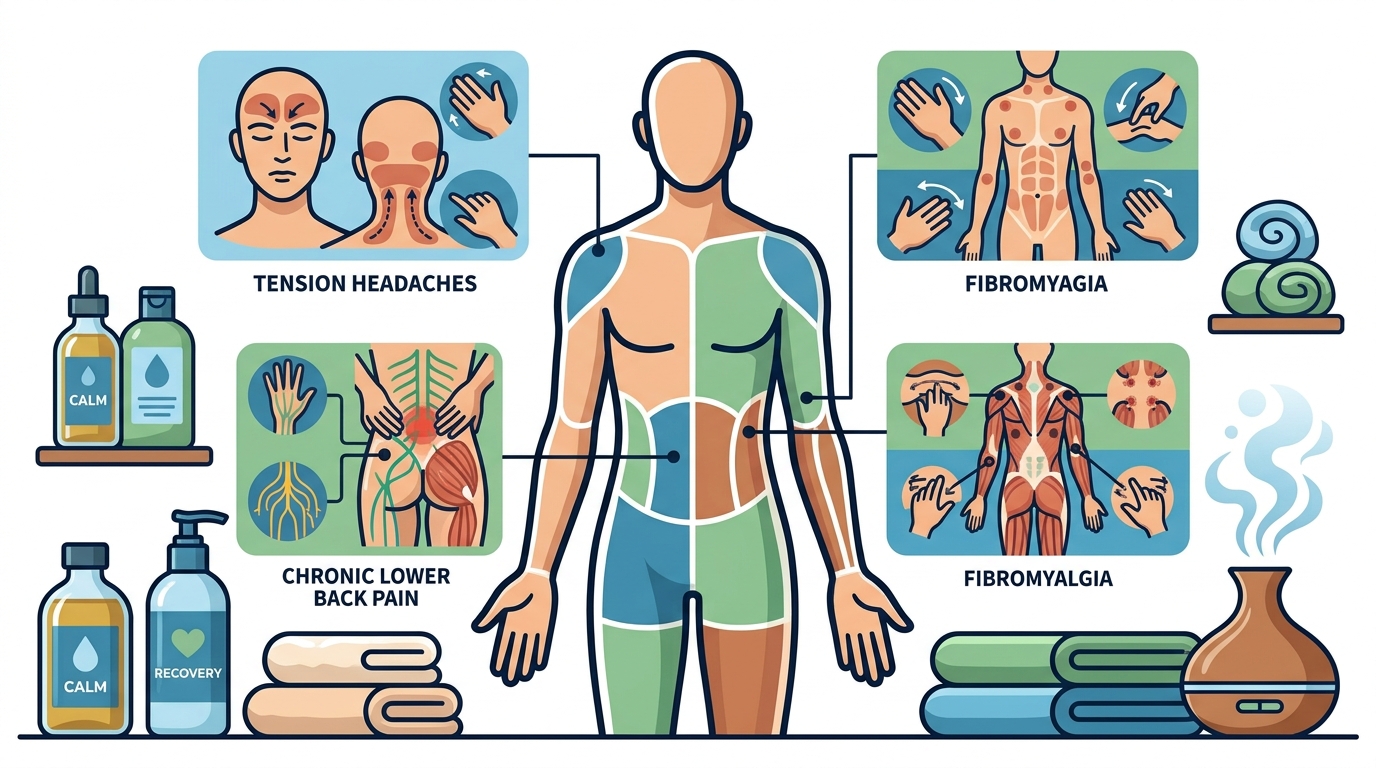
Chronic pain conditions that respond best to massage therapy include fibromyalgia, tension headaches, and chronic lower back pain. These conditions often involve muscle tension, inflammation, or nerve sensitivity that manual therapy can address. At Piedmont Injury Massage, we focus on these specific areas to provide targeted relief. Understanding which conditions benefit most helps you set realistic expectations for your treatment plan.
Fibromyalgia and Widespread Muscle Sensitivity
Fibromyalgia is a disorder characterized by widespread musculoskeletal pain, fatigue, and sleep disturbances. Many patients report heightened sensitivity to touch, which can make standard massage techniques feel uncomfortable. However, gentle, slow-stroke massage has shown promise in reducing pain intensity for some individuals. The goal is not to work out knots aggressively but to calm the nervous system.
Research suggests that massage therapy can help lower stress hormones and improve sleep quality in fibromyalgia patients. At Piedmont Injury Massage, our therapists adjust pressure and technique based on your specific sensitivity levels. We prioritize a relaxed environment to ensure the session contributes to overall nervous system regulation rather than adding to physical stress.
Chronic Tension Headaches and Neck Pain
Chronic tension headaches are often linked to sustained muscle contraction in the neck and shoulders. This condition is one of the most common reasons people seek out massage therapy. The evidence for massage in treating tension headaches is strong, with studies indicating it can be as effective as certain medications for pain reduction. By releasing tightness in the trapezius and suboccipital muscles, we can alleviate the pressure that triggers these headaches.
For clients in Hoschton and Braselton, we often combine neck-focused techniques with broader shoulder work. This approach addresses the root cause of the tension rather than just the symptom. If you suffer from frequent headaches, a consultation can help determine if muscle tension is a primary factor in your pain.
Chronic Lower Back Pain and Postural Strain
Chronic lower back pain is a leading cause of disability worldwide, and massage therapy is a frequently recommended complementary treatment. While massage does not fix structural issues like herniated discs, it is highly effective for pain caused by muscle spasm and poor posture. Deep tissue techniques can help break up adhesions in the lumbar region and surrounding muscles. This improves mobility and reduces the compensatory strain that keeps the pain cycle going.
Our therapeutic massage services are designed to address these specific areas. We focus on the erector spinae, quadratus lumborum, and gluteal muscles. By improving flexibility and reducing inflammation in these zones, we help restore normal movement patterns. This is particularly beneficial for individuals who sit for long periods during the workday.
Arthritis and Joint-Related Pain
Arthritis is a group of conditions involving joint inflammation, leading to pain and stiffness. While massage cannot reverse joint damage, it can significantly improve quality of life by reducing pain and increasing range of motion. Gentle massage around the affected joints helps maintain circulation and prevents the surrounding muscles from becoming overly tight. This is crucial because tight muscles can pull on the joint, exacerbating the pain.
For clients managing arthritis, we use lighter pressure and focus on the muscles surrounding the joint rather than the joint itself. This approach ensures comfort while still providing the benefits of improved circulation and relaxation. Our lymphatic drainage massage techniques can also help reduce swelling in the extremities, which is a common complaint for arthritis patients.
Neuropathic Pain and Nerve Sensitivity
Neuropathic pain is caused by damage or dysfunction in the somatosensory nervous system. Conditions like diabetic neuropathy or shingles can cause burning, tingling, or shooting pain. Traditional deep tissue massage may not be suitable for all neuropathic pain cases, as it can sometimes aggravate nerve sensitivity. However, specific techniques like frequency-specific microcurrent (FSM) may offer relief by targeting the nerve tissue directly.
At Piedmont Injury Massage, we offer FSM as a complementary treatment for nerve-related pain. This non-invasive technique uses low-level electrical current to stimulate the body's natural healing processes. It is a valuable tool for clients who find traditional massage too intense or ineffective for their specific type of nerve pain.
Key Takeaways
- Fibromyalgia patients may benefit from gentle, slow-stroke massage to calm the nervous system.
- Chronic tension headaches are strongly linked to neck and shoulder muscle tension, which massage can effectively address.
- Deep tissue massage is effective for chronic lower back pain caused by muscle spasm and postural strain.
- Massage can improve quality of life for arthritis patients by reducing pain and maintaining joint mobility.
- Neuropathic pain may require specialized techniques like FSM rather than traditional deep tissue massage.
- Individual responses to massage vary, so a personalized assessment is crucial for determining the best approach.
Frequently Asked Questions
Is massage therapy safe for all chronic pain conditions?
Massage therapy is generally safe for most chronic pain conditions, but it is not a one-size-fits-all solution. For conditions involving acute inflammation, infection, or certain neurological disorders, massage may need to be modified or avoided. Always inform your therapist about your full medical history so they can tailor the treatment to your specific needs and ensure your safety.
How many sessions are needed to see results for chronic pain?
The number of sessions required varies depending on the severity of the condition and individual response. Many clients notice some relief after the first session, but significant improvements often require a series of treatments over several weeks. Consistency is key, and your therapist will help you develop a treatment plan that aligns with your goals and schedule.
Can massage therapy replace medication for chronic pain?
Massage therapy is a complementary treatment and is not a replacement for prescribed medication. It can be used alongside medication to enhance pain management and improve overall well-being. Always consult with your healthcare provider before making any changes to your medication regimen. Massage can help reduce the need for medication in some cases, but this should be done under medical supervision.
What should I expect during my first massage session for chronic pain?
Your first session will begin with a consultation to discuss your pain history, goals, and any areas of concern. The therapist will then perform a physical assessment to identify areas of tension or restriction. Based on this assessment, they will develop a treatment plan and begin the massage. You should feel comfortable communicating your comfort level throughout the session.
Does insurance cover massage therapy for chronic pain?
Insurance coverage for massage therapy varies by provider and plan. Some insurance plans cover massage therapy when it is prescribed by a healthcare provider for a specific medical condition. It is best to check with your insurance company to understand your coverage and any requirements for pre-authorization or referral.
Start Your Path to Pain Relief
Chronic pain does not have to be your normal. At Piedmont Injury Massage, we are dedicated to helping you find relief through personalized, evidence-based care. Our certified therapists are experienced in treating a wide range of chronic pain conditions and will work with you to create a plan that fits your unique needs. To schedule a consultation and take the first step toward a pain-free life, contact our team. Learn more: Contact Us Piedmont Injury.