

Yes, you can get massage therapy for chronic pain relief. It is a widely recognized, non-invasive treatment that helps manage persistent discomfort. This guide covers the specific conditions it addresses and the evidence behind its effectiveness.
Chronic Pain Conditions
Chronic pain is a complex condition that affects millions of people. It is not just a symptom but a disease in itself. Understanding the specific types of pain helps in choosing the right therapeutic approach. according to Natural Relief for
Common Conditions Treated
Massage therapy is often recommended for several specific chronic conditions. These include fibromyalgia, arthritis, and chronic lower back pain. Each condition presents unique challenges that require a tailored treatment plan.
For individuals dealing with fibromyalgia, the focus is often on reducing widespread muscle tenderness. In cases of arthritis, the goal is to maintain joint mobility and reduce stiffness. Chronic lower back pain, a leading cause of disability, often benefits from targeted soft tissue work.
Identifying Your Pain Type
Before starting any treatment, it is crucial to identify the source of your pain. Is it muscular, neurological, or inflammatory? A professional assessment can help determine the best course of action. This ensures that the therapy addresses the root cause rather than just the symptoms.
At Piedmont Injury Massage, we begin with a detailed intake process. This helps us understand your specific pain history and physical limitations. We then design a plan that fits your unique needs.
Massage Therapy Effectiveness
Massage therapy is more than just relaxation. It is a clinical tool with measurable physiological effects. Research supports its use in pain management and overall wellness.
Physiological Mechanisms
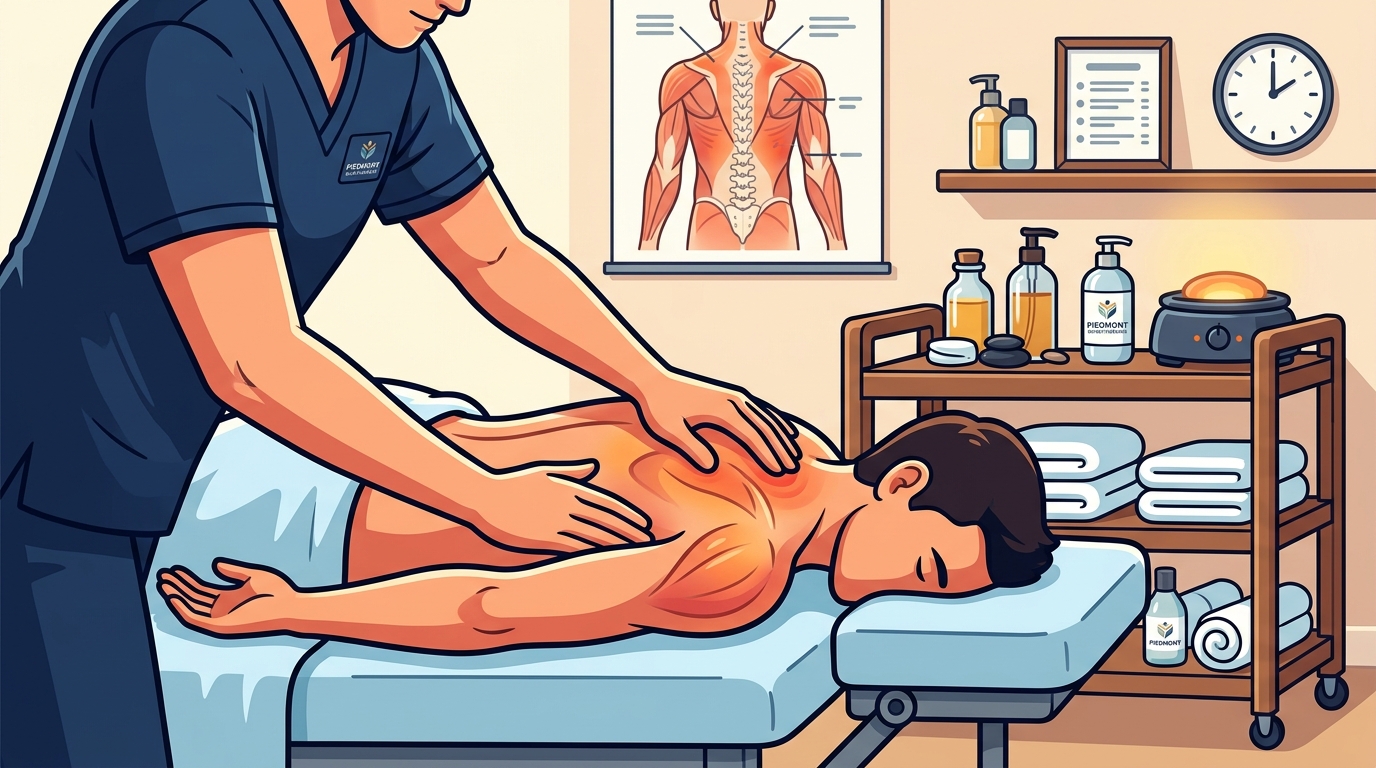
Massage works by influencing the body's nervous system. It can reduce the production of stress hormones like cortisol. At the same time, it increases the release of endorphins and serotonin. These chemical changes help lower the perception of pain.
Furthermore, massage improves blood circulation. This brings more oxygen and nutrients to damaged tissues. It also helps remove waste products that can contribute to inflammation. The result is a reduction in swelling and stiffness.
Research and Evidence
Studies have shown that massage therapy can be effective for chronic pain. A systematic review of randomized trials suggests it helps with subacute and chronic nonspecific low back pain. Research from NW Health highlights these benefits. Additionally, AIAM notes that medical massage is increasingly regarded as an effective treatment for chronic pain.
While it may not cure the underlying condition, it provides significant relief. It improves quality of life and functional ability. Many patients report better sleep and reduced anxiety after regular sessions.
Choosing the Right Technique
Different techniques suit different pain types. Deep tissue massage is often used for chronic muscle tension. It applies firm pressure to release deep layers of muscle and connective tissue. This can be intense but is highly effective for stubborn pain.
For those with more sensitive pain, a gentler approach may be better. Swedish massage uses long, gliding strokes to promote relaxation. It is less intense and focuses on overall circulation. The choice depends on your tolerance and specific goals.
| Technique | Best For | Intensity |
|---|---|---|
| Deep Tissue | Chronic muscle tension, knots | High |
| Swedish | General relaxation, mild pain | Low to Medium |
| Sports Massage | Recovery, prevention | Medium to High |
Key Takeaways
- Massage therapy is a valid treatment for chronic pain.
- It works by reducing stress hormones and improving circulation.
- Deep tissue massage is effective for stubborn muscle tension.
- Swedish massage is better for general relaxation and mild pain.
- Research supports its use for lower back pain and fibromyalgia. according to Four Benefits of
- Personalized plans are essential for best results.
- Regular sessions are often needed for long-term relief.
- Always consult with a professional to identify your pain type.
Frequently Asked Questions
Is massage therapy safe for chronic pain?
Yes, when performed by a qualified professional. It is generally safe for most people. However, you should inform your therapist of any medical conditions.
How many sessions do I need?
This varies by individual. Some people feel relief after one session. Others may need a series of treatments for lasting results. Consistency is key.
Does insurance cover massage therapy?
Coverage depends on your specific plan. Some insurance providers cover it for medical conditions. Check with your provider to see what is included.
Can massage cure chronic pain?
Massage therapy manages pain rather than curing it. It helps reduce symptoms and improve function. It is often used as part of a broader treatment plan.
What should I expect during a session?
You will lie on a table while the therapist works on your muscles. The pressure will vary based on the technique used. You should communicate if the pressure is too much.
Is it better than medication?
It is a different approach. Some people prefer non-pharmacological options. It can be used alongside medication or as an alternative. Discuss with your doctor.
How do I find a good therapist?
Look for certified professionals with experience in pain management. Read reviews and ask for recommendations. A good therapist will listen to your needs.
Can I do massage at home?
You can use tools like foam rollers or massage balls. These can help with self-care. However, they do not replace professional treatment for chronic conditions.
Conclusion
Chronic pain does not have to be your normal. Massage therapy offers a safe and effective way to find relief. By understanding your condition and choosing the right technique, you can improve your quality of life. Contact Piedmont Injury Massage today to start your journey toward pain-free living.