
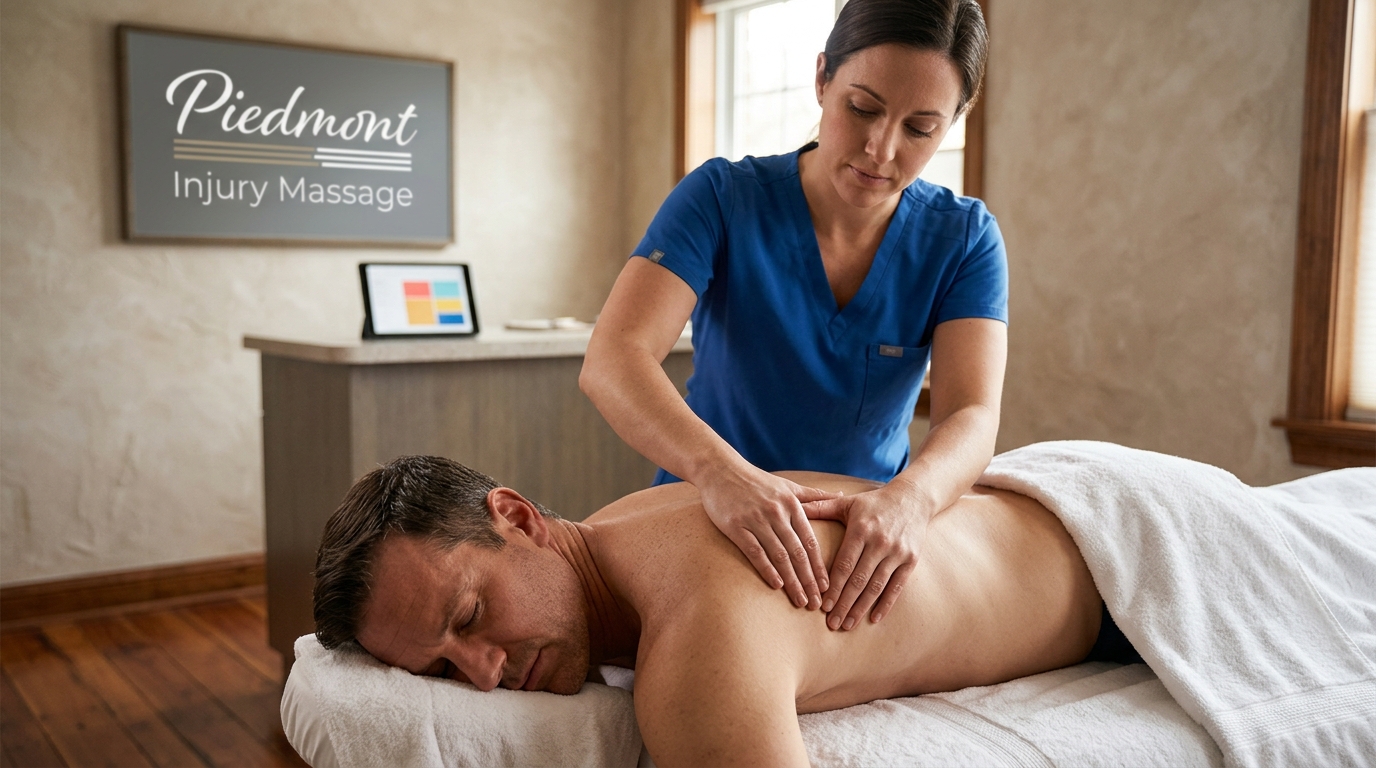
What stage is your injury in and how does that affect which massage type you need?
The stage of your injury directly dictates the appropriate massage therapy modality. Acute injuries require gentle, indirect techniques to prevent tissue damage, while chronic conditions benefit from deeper, targeted work to break up scar tissue. Piedmont Injury Massage in Hoschton and Braselton, GA, uses this staged approach to ensure safe and effective recovery.
The Acute Phase: Protecting New Tissue
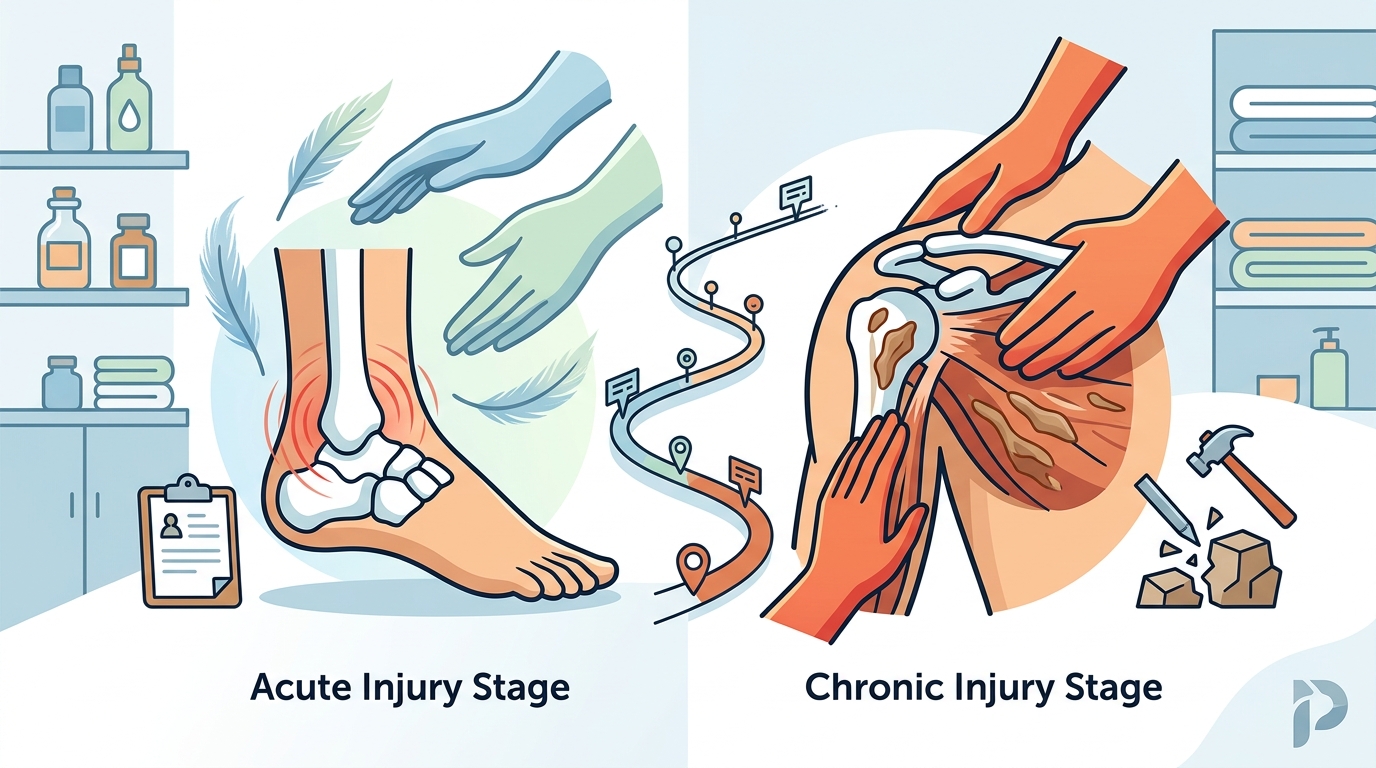
In the first 48 to 72 hours after an injury, the body enters the acute inflammatory phase. During this window, the primary goal is to reduce swelling and prevent further damage. Deep tissue or aggressive sports massage is contraindicated because it can increase inflammation and delay healing. Instead, therapists focus on gentle, indirect techniques that promote lymphatic flow without stressing the injured area.
For example, a client who recently sprained their ankle should avoid direct pressure on the joint. At Piedmont Injury Massage, our certified therapists assess the injury's age and severity to determine if any manual therapy is safe. If the tissue is still highly inflamed, we may recommend rest and elevation before beginning any hands-on treatment.
The Subacute Phase: Managing Stiffness and Pain
As the initial inflammation subsides, the injury enters the subacute phase, typically lasting from three days to three weeks. During this stage, the body begins repairing damaged tissue, but stiffness and pain often persist. This is the ideal window for introducing gentle therapeutic massage. The focus shifts from reducing swelling to improving circulation and preventing the formation of restrictive scar tissue.
Therapeutic massage techniques, such as myofascial release, are particularly effective during this phase. These methods help restore range of motion and reduce muscle guarding. For instance, a client recovering from a shoulder strain may benefit from light effleurage and gentle stretching to maintain mobility without aggravating the healing tendon.
The Chronic Phase: Breaking Up Scar Tissue
When an injury persists beyond three weeks, it is often classified as chronic. In this stage, the body may have formed dense scar tissue or adhesions that limit movement and cause ongoing pain. Deep tissue massage and sports massage are highly effective here. These modalities apply firm pressure to break up adhesions and restore normal tissue elasticity.
For example, a runner with chronic plantar fasciitis may require deep tissue work to release the tight fascia in the foot and calf. At Piedmont Injury Massage, we use advanced techniques to target these specific areas, helping clients regain full function. The goal is not just pain relief, but long-term structural correction.
Post-Surgical Recovery: A Unique Trajectory
Post-surgical injuries follow a different healing trajectory than acute or chronic conditions. The timing of massage after surgery depends on the type of procedure and the surgeon's recommendations. Generally, light massage can begin once the incision is fully closed and the risk of infection has passed. This helps reduce post-operative swelling and improves circulation to the surgical site.
As healing progresses, the focus shifts to addressing the scar tissue that forms around the incision. Techniques like lymphatic drainage massage are crucial for managing fluid retention. Later, deeper work can be introduced to mobilize the scar and restore full range of motion. Our team works closely with clients to align massage therapy with their specific surgical recovery plan.
How We Assess Your Injury Stage
Determining the correct massage type requires a thorough assessment of your injury's history and current symptoms. At Piedmont Injury Massage, we begin with a detailed intake process that includes questions about the mechanism of injury, pain levels, and range of motion. We also perform a physical examination to evaluate tissue texture, temperature, and mobility.
This assessment allows us to categorize your injury into the appropriate phase and select the most suitable modality. Whether you are dealing with an acute sprain, a chronic strain, or post-surgical stiffness, our certified therapists tailor each session to your specific needs. This personalized approach ensures that you receive the right care at the right time, maximizing your recovery potential.
Key Takeaways
- Acute injuries (0-72 hours) require gentle, indirect techniques to avoid increasing inflammation.
- The subacute phase (3 days to 3 weeks) is ideal for introducing light therapeutic massage to improve circulation.
- Chronic injuries benefit from deep tissue and sports massage to break up scar tissue and restore mobility.
- Post-surgical massage timing depends on the procedure and surgeon's guidance, starting with light work once the incision is closed.
- A professional assessment is essential to determine the correct injury stage and select the appropriate modality.
- Piedmont Injury Massage provides personalized care for all injury stages in Hoschton and Braselton, GA.
Frequently Asked Questions
Can I get a massage immediately after an injury?
It is generally not recommended to receive deep or aggressive massage immediately after an acute injury. Gentle, indirect techniques may be appropriate, but a professional assessment is necessary to ensure safety.
How do I know if my injury is chronic?
An injury is typically considered chronic if it persists beyond three weeks. If you are experiencing ongoing pain or limited mobility, it is time to consult a professional for a thorough evaluation.
Is sports massage safe for post-surgical recovery?
Sports massage can be part of post-surgical recovery, but only after the initial healing phase is complete. The timing and intensity must be carefully managed by a qualified therapist.
What is the difference between therapeutic and deep tissue massage?
Therapeutic massage uses a variety of techniques to address specific health concerns, while deep tissue massage focuses on applying firm pressure to deeper layers of muscle and connective tissue.
How often should I get a massage during recovery?
The frequency of massage depends on the stage of your injury and your specific goals. Your therapist will recommend a schedule that aligns with your healing progress.