Retinoids restore skin firmness by accelerating cell turnover and stimulating collagen production. These vitamin A derivatives signal fibroblasts to create new structural proteins, reversing the thinning and sagging associated with aging. At Piedmont Injury Massage, we integrate these biological mechanisms into holistic skin care plans for residents of Braselton and Hoschton, GA.
The Biological Mechanism of Retinoids
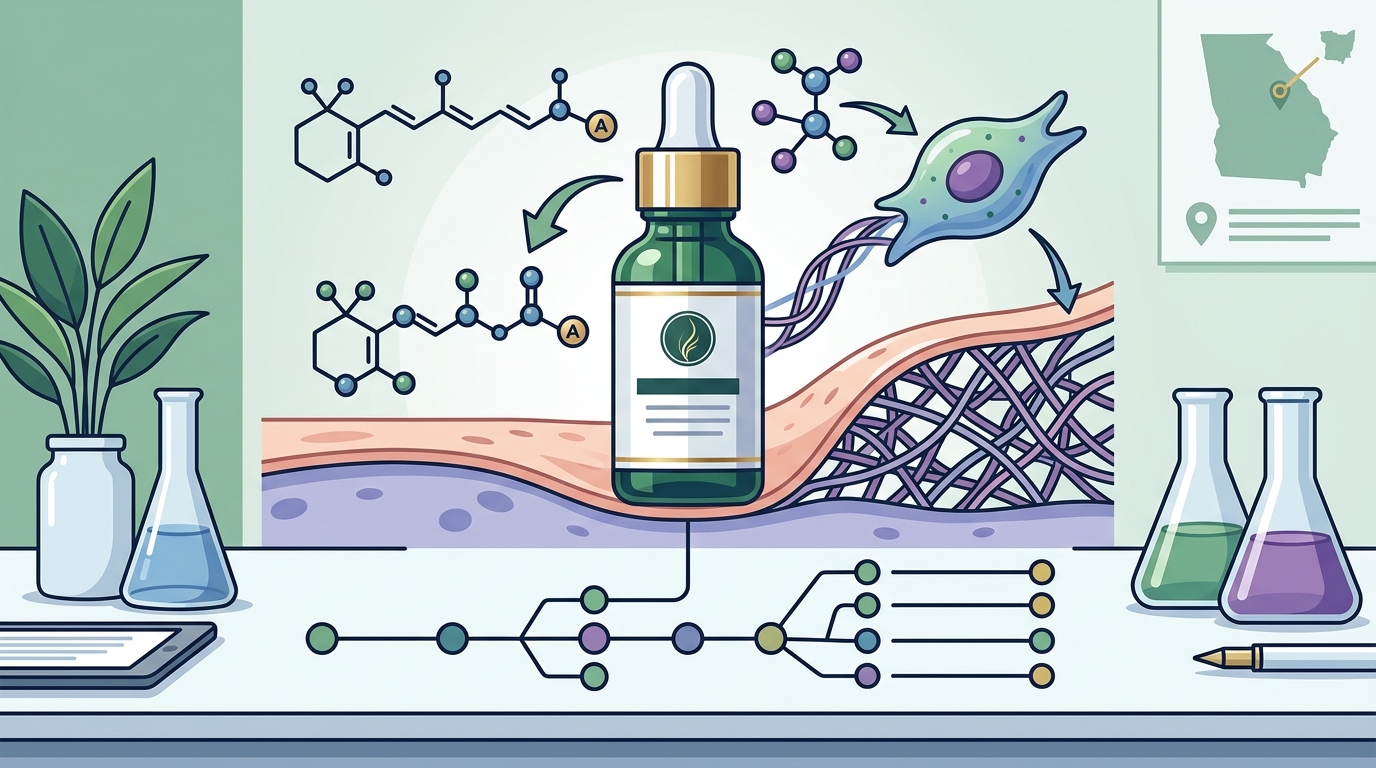
Retinoid is a class of compounds derived from vitamin A that interacts directly with cellular receptors. When applied topically, these molecules penetrate the epidermis and bind to retinoic acid receptors within the cell nucleus. This binding triggers a cascade of genetic signals that instruct the skin to behave as if it were younger.
The primary action involves the normalization of keratinocyte differentiation. In aging skin, cells often clump together and shed slowly, leading to a rough texture. Retinoids force these cells to mature and shed at a faster, more regular rate. This process, known as exfoliation, reveals the smoother, brighter skin layers underneath.
Furthermore, retinoids influence the dermis, the deeper layer of skin where structural integrity resides. By modulating gene expression, they reduce the activity of matrix metalloproteinases (MMPs). MMPs are enzymes that break down collagen and elastin. By suppressing these destructive enzymes, retinoids protect the existing structural framework of the skin.
Collagen Synthesis and Structural Repair
Collagen is the primary structural protein that provides skin with its tensile strength and firmness. As we age, the body’s natural production of collagen declines, leading to a loss of volume and elasticity. Retinoids counteract this decline by stimulating fibroblasts, the cells responsible for producing collagen.
Research indicates that consistent use of retinoids can increase the thickness of the dermis. This thickening is not merely superficial; it represents a genuine rebuilding of the skin’s scaffold. The new collagen fibers are often more organized and robust than the degraded fibers they replace. This structural reinforcement is what patients perceive as increased firmness.
Types of Retinoids and Their Potency
Retinol is a milder form that must be converted by the skin into retinoic acid to become active. This conversion process makes it less potent but generally better tolerated by sensitive skin. It is often recommended for beginners or those with reactive skin types.
Tretinoin, on the other hand, is the active form of vitamin A. It does not require conversion, making it significantly more effective at stimulating collagen. However, its potency comes with a higher risk of side effects, including redness, peeling, and dryness. For many patients, a gradual introduction to prescription retinoids under professional guidance yields the best long-term results.
Integrating Retinoids with Professional Care
While topical retinoids are powerful, they work best as part of a comprehensive skin health strategy. At Piedmont Injury Massage, we view skin care as an extension of overall wellness. Our approach combines advanced treatments with personalized guidance to maximize the benefits of retinoid therapy.
For example, patients using retinoids may experience increased sun sensitivity. This is because the rapid turnover of skin cells leaves the surface more vulnerable to UV damage. We emphasize the critical importance of daily sun protection to prevent the very photoaging that retinoids are designed to reverse. Our team in Hoschton provides education on proper application techniques to minimize irritation while maximizing efficacy.
We also consider the role of other treatments in supporting retinoid results. For instance, our HydraFacial services can help maintain hydration and barrier integrity during the adjustment period of retinoid use. By keeping the skin barrier healthy, we ensure that the active ingredients can penetrate effectively without causing excessive inflammation.
Managing Expectations and Side Effects
Patients often expect immediate results, but retinoids are a long-term investment. Visible improvements in firmness and elasticity typically take several months of consistent use. The initial weeks may involve a period of adjustment, often referred to as the "retinization" phase.
During this phase, the skin may experience dryness, flaking, or mild redness. These are normal signs that the skin is adapting to the increased cell turnover. It is important to continue using the product as directed, but to do so with a gentle moisturizer and sunscreen. If irritation becomes severe, reducing the frequency of application can help the skin adjust.
Consistency is the key to success. Skipping applications or switching products frequently can disrupt the biological processes that retinoids initiate. By committing to a steady routine, patients can achieve the cumulative benefits of collagen synthesis and structural repair. Our goal is to help you navigate this process with confidence and comfort.
Key Takeaways
- Retinoids are vitamin A derivatives that bind to cellular receptors to normalize skin cell turnover.
- They stimulate fibroblasts to produce new collagen, which thickens the dermis and restores firmness.
- Retinoids suppress matrix metalloproteinases, enzymes that break down existing collagen and elastin.
- Prescription-strength tretinoin is more potent than over-the-counter retinol but carries a higher risk of irritation.
- Daily sun protection is essential when using retinoids to prevent UV-induced damage.
- Visible results in skin elasticity typically require several months of consistent use.
- Professional guidance can help manage side effects and optimize the retinoid regimen.
Frequently Asked Questions
How long does it take for retinoids to show results?
Initial improvements in texture may be seen within four to six weeks. However, significant changes in firmness and elasticity usually require three to six months of consistent use. The biological process of collagen synthesis is slow and requires time to manifest visibly.
Can retinoids cause permanent damage to the skin?
No, retinoids do not cause permanent damage. The irritation experienced during the adjustment phase is temporary. Once the skin adapts, the barrier function is often improved. However, improper use or excessive sun exposure can lead to temporary redness or dryness, which resolves with correct application and protection.
Should I use retinoids if I have sensitive skin?
Yes, but you should start with a lower concentration, such as retinol. Introduce the product slowly, perhaps every other night, and always use a gentle moisturizer. If you experience severe irritation, consult with a professional to find a formulation that suits your skin type.
Do retinoids work for all skin types?
Retinoids are effective for most skin types, including oily, dry, and combination skin. However, individuals with very sensitive or compromised skin barriers may need to build up tolerance gradually. Professional assessment can help determine the best starting point for your specific skin condition.
Can I use retinoids during the day?
It is generally recommended to use retinoids at night. This is because they can increase sun sensitivity, and UV exposure can degrade the active ingredients. Using them at night allows the skin to repair and regenerate without the risk of photo-oxidation.
Conclusion
Retinoids remain the gold standard for reversing the signs of aging skin. By understanding the biological mechanisms of cell turnover and collagen synthesis, you can make informed decisions about your skin care routine. At Piedmont Injury Massage, we are committed to helping you achieve your skin health goals through personalized, evidence-based care. To begin your journey toward firmer, more elastic skin, to schedule a consultation today.